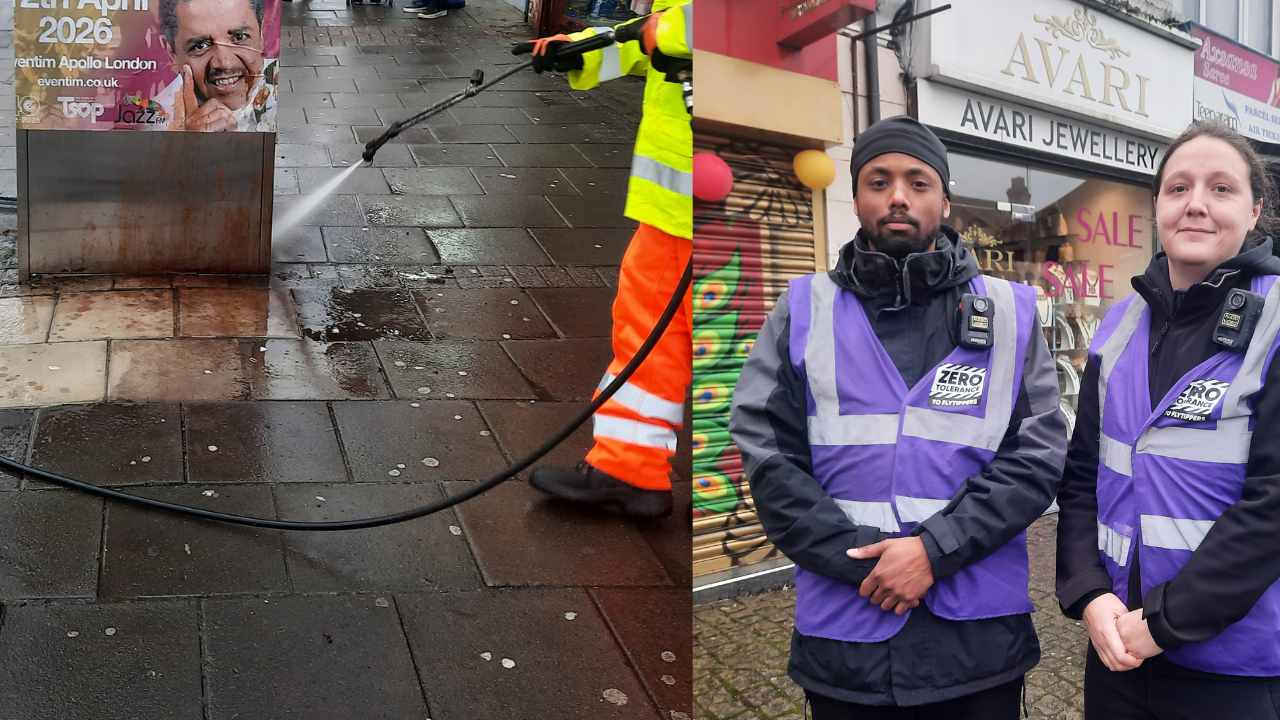
Brent Council just slapped two men with fines exceeding £1,000 for spitting paan. The headlines are screaming about "victory for the streets" and "crackdowns on antisocial behavior." The public is nodding along, satisfied that a disgusting habit is finally being met with the iron fist of the law.
They are all wrong. You might also find this connected article insightful: The $2 Billion Pause and the High Stakes of Silence.
These fines aren't a solution. They are a white flag. When a local authority has to resort to four-figure financial executions for a biological reflex—however culturally specific or aesthetically offensive—it proves they have utterly failed to manage the urban environment. We are witnessing the "Broken Windows Theory" being applied with the elegance of a sledgehammer, and it won't fix a single sidewalk in Wembley.
The Myth of the Deterrent
The "lazy consensus" suggests that if you make the penalty high enough, the behavior stops. It’s basic economics, right? Wrong. As extensively documented in detailed reports by The Washington Post, the implications are significant.
In the real world of urban sociology, hyper-inflated fines for low-level "enviro-crimes" do two things: they create an uncollectible debt for the marginalized and they provide a momentary PR high for councillors who want to look "tough."
Paan isn't a cigarette butt. It isn't a crisp packet. It is a deeply ingrained cultural habit involving areca nut, tobacco, and lime that stimulates a physiological need to expectorate. You are trying to fine away a reflex. Unless Brent Council plans to station a uniformed officer on every corner of Ealing Road 24/7, these two men aren't a trend; they are scapegoats.
I’ve seen this play out in dozens of "regeneration" zones. A council ignores the root causes of street degradation—lack of facilities, poor lighting, and declining footfall—and then picks a visible, culturally-coded target to "clean up" the image of the borough. It’s visual politics. It’s easier to fine an individual than it is to design a street that stays clean.
The Design Flaw: Why Spitting is a Failure of Infrastructure
We treat the street as a static museum floor. It isn't. It’s a living organism.
If people are spitting on the floor, the floor is designed incorrectly. That sounds like a radical take, but it’s the only one that actually solves the problem. In cities like Mumbai or Taipei, where betel nut consumption is massive, authorities have spent decades oscillating between bans and fines. Do you know what worked better than a £1,000 fine?
Strategic infrastructure.
Instead of expecting people to swallow a caustic mixture of lime and tobacco—which is literally a health hazard—or carry a "spit cup" in a society that offers no place to discreetly empty it, we should be looking at how we manage waste. If you provide zero public bins with specialized disposal units, you are effectively consenting to the floor being the bin.
The UK has spent the last decade removing public toilets and bins under the guise of "security" and "austerity." Now, we act shocked when the byproduct of human existence ends up on the pavement. You cannot remove the infrastructure of hygiene and then fine people for being unhygienic.
The Selective Outrage Problem
Let’s talk about the £1,000 figure.
In London, you can be caught fly-tipping a sofa and potentially pay less if you’re savvy with the appeals process. You can commit mid-level corporate fraud that bleeds the taxpayer dry and never see a courtroom. But spit out a leaf in Brent? That’s a grand.
This isn't about cleanliness; it’s about a specific type of "othering." Paan spitting is visually jarring. It looks like blood. It stains. It is "foreign" to the sanitized, gentrified vision of London that developers want to sell.
If the council were truly concerned about the caustic nature of the stains, they would invest in the specialized high-pressure steam cleaning equipment required to remove them. Instead, they use the fines to fund the enforcement officers who hand out more fines. It’s a closed-loop system of bureaucracy that does nothing to improve the actual texture of the neighborhood.
The "E-E-A-T" Reality Check: The Cost of Enforcement
I have consulted on urban management projects where the cost of "enforcement" actually outweighed the cost of "maintenance" by a factor of three to one.
When you factor in the legal hours, the court time, the enforcement officer’s salary, and the administrative overhead to process a £1,000 fine for spitting, the taxpayer is actually losing money.
- The Officer: Paid to patrol and document.
- The Legal Team: Paid to ensure the Fixed Penalty Notice (FPN) holds up in court.
- The Court System: Clogged with "public nuisance" cases while violent crime backlogs grow.
The actual cost to wash that specific patch of pavement? About £15 in labor and water.
We are choosing the most expensive, most confrontational, and least effective way to keep our streets clean. We are prioritizing the punishment of the resident over the service of the street.
Stop Fining, Start Engineering
The "People Also Ask" crowd wants to know: "How do we stop paan spitting in public?"
The answer isn't "more police." The answer is "better streets."
- Anti-Stain Coatings: There are hydrophobic and oleophobic coatings used in industrial settings that prevent liquids from bonding to stone. Apply them to "hotspot" corners. The spit washes away with the rain. No stains, no problem.
- Cultural Integration, Not Erasure: Work with local businesses that sell paan. If you sell it, you should be required to provide a disposal point. This works for coffee shops and their cups; why not here?
- Real Maintenance Schedules: If a street is known for high footfall and specific types of waste, you increase the cleaning frequency. You don't just wait for it to get disgusting and then fine the nearest person you catch in the act.
The Bitter Truth
The reason we love these headlines is because they give us a villain. We can point at the "disgusting" spitters and feel superior. We can pretend the council is "taking back our streets."
It’s a lie.
The streets are still dirty. The underlying social and physiological habits haven't changed. All that happened is two people are now a thousand pounds poorer, and the council has a nice press release to distract you from the fact that your bins haven't been collected on time in three weeks.
If you want clean streets, demand better engineering and more frequent cleaning. Stop cheering for the financial ruin of people for a habit that is ultimately a symptom of a broken urban design.
The £1,000 fine isn't a sign of a strong council. It's the desperate gasp of a failing one.
Go find a better way to manage a city.